
Word formations in Sanskrit
This chapter deals with word formations in Sanskrit. Although this is an important chapter, you
may prefer to skim this chapter for now and revist it when you have a better grasp of Sanskrit.
Types of words in Sanskrit
In everyday usage a word is called शब्द, but in the context of व्याकरण (grammar) it is called पद
All words in Sanskrit fall under one of two categories, it is either a सुबन्त (noun) or a तिङन्त (verb).
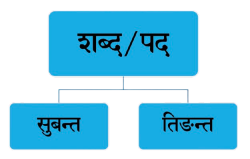
सुबन्त = नाम (noun), सर्वनाम (pronoun), विशेषण (adjective), क्रियाविशेषण (adverb) and अव्यय (indeclinable)
तिङन्त = क्रिया/क्रियापद (verbs)
The word सुबन्त is formed from the two words सुप्-अन्त, meaning a word that ends in सुप् (a group of 21 suffixes).
The word तिङन्त is formed from the two words तिङ्-अन्त, meaning a word that ends in तिङ् (a group of 9 suffixes).
सुबन्त = प्रातिपदिक (base) + सुप्-प्रत्यय (प्रत्यय means suffix).
प्रातिपदिक can be one of कृदन्त, तद्धितान्त, समस्तपद, etc. These will be covered in detail in later chapters.
तिङन्त = धातु (root) + तिङ्-प्रत्यय
How are words formed?
Every word in Sanskrit is either a सुबन्त or a तिङन्त.
धातु-s are not formed, they are the fundamental verbal roots of Sanskrit. There are about 2104 धातु-s in Sanskrit.
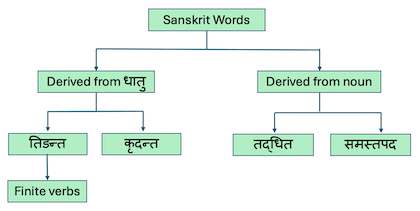
सुबन्त (Subanta), तिङन्त (Tiṅanta), कृदन्त (Kṛdanta), तद्धित (Taddhita) and समस्तपदम् (Samastapadam) are the foundation of Sanskrit word formation. They tell you where a word comes from and how it is formed.
1. सुबन्त (Subanta)
A सुबन्त is a noun (or pronoun/adjective) ending in a सुप् प्रत्यय.
सुबन्त = प्रातिपदिक + सुप्-प्रत्यय
All nouns, pronouns, adjectives, etc., after declension become Subantas.
Top of page
2. तिङन्त (Tiṅanta)
A तिङन्त is a finite verb. It is formed by adding तिङ् प्रत्यय-s (verb endings) to a verbal base.
तिङन्त = धातु + तिङ्-प्रत्यय
3. कृदन्त (Kṛdanta)
A कृदन्त is formed by adding a कृत् प्रत्यय to a धातु. Unlike Tiṅanta words, Kṛdantas are not finite verbs. They become प्रातिपदिक-s.
कृदन्त = धातु + कृत्-प्रत्यय
A Kṛdanta is not a verb. It behaves like a noun, adjective or indeclinable.
4. तद्धित (Taddhita)
A तद्धित word is formed by adding a तद्धित प्रत्यय to a noun (प्रातिपदिक). Unlike Kṛdanta, it does not begin with a धातु.
तद्धित = प्रातिपदिक + तद्धित-प्रत्यय
Taddhita suffixes often express
5. समस्तपदम् (Samastapadam)
A समस्तपदम् is a compound word. It is formed by joining two or more words.
समस्तपदम् = पदम् + पदम्
Compounds are called समास-s.
Major types:
Here is a pictorial representation that might help!
Sentence structure
English uses the SVO ordering, for example: The boy (subject) reads (verb) the book (object). Interestingly, Sanskrit has no fixed ordering, the words can be in any order and will still retain the same meaning. For example:
बालकः पुस्तकं पठति
पुस्तकं पठति बालकः
पठति बालकः पुस्तकं
However, colloquially it follows the SOV ordering, so बालकः (subject) पुस्तकं (object) पठति (verb) would be most commonly used.
Click here to study the next chapter on Genders
Types of words in Sanskrit
In everyday usage a word is called शब्द, but in the context of व्याकरण (grammar) it is called पद
All words in Sanskrit fall under one of two categories, it is either a सुबन्त (noun) or a तिङन्त (verb).
सुबन्त = नाम (noun), सर्वनाम (pronoun), विशेषण (adjective), क्रियाविशेषण (adverb) and अव्यय (indeclinable)
तिङन्त = क्रिया/क्रियापद (verbs)
The word सुबन्त is formed from the two words सुप्-अन्त, meaning a word that ends in सुप् (a group of 21 suffixes).
The word तिङन्त is formed from the two words तिङ्-अन्त, meaning a word that ends in तिङ् (a group of 9 suffixes).
सुबन्त = प्रातिपदिक (base) + सुप्-प्रत्यय (प्रत्यय means suffix).
प्रातिपदिक can be one of कृदन्त, तद्धितान्त, समस्तपद, etc. These will be covered in detail in later chapters.
तिङन्त = धातु (root) + तिङ्-प्रत्यय
How are words formed?
Every word in Sanskrit is either a सुबन्त or a तिङन्त.
धातु-s are not formed, they are the fundamental verbal roots of Sanskrit. There are about 2104 धातु-s in Sanskrit.
सुबन्त (Subanta), तिङन्त (Tiṅanta), कृदन्त (Kṛdanta), तद्धित (Taddhita) and समस्तपदम् (Samastapadam) are the foundation of Sanskrit word formation. They tell you where a word comes from and how it is formed.
1. सुबन्त (Subanta)
A सुबन्त is a noun (or pronoun/adjective) ending in a सुप् प्रत्यय.
सुबन्त = प्रातिपदिक + सुप्-प्रत्यय
All nouns, pronouns, adjectives, etc., after declension become Subantas.
| Prātipadika | Sup suffix | Subanta | Meaning |
|---|---|---|---|
| राम | सुँ | रामः | Rama |
| फल | सुँ | फलम् | Fruit |
| नदी | सुँ | नदी | River |
| विभक्तिः | एकवचनम् | द्विवचनम् | बहुवचनम् |
|---|---|---|---|
| प्रथमा | राम + सु = रामः | राम + औ = रामौ | राम + जस् = रामाः |
| द्वितीया | राम + अम् = रामम् | राम + औट् = रामौ | राम + शस् = रामान् |
| तृतीया | राम + टा = रामेण | राम + भ्याम् = रामाभ्याम् | राम + भिस् = रामैः |
| चतुर्थी | राम + ङे = रामाय | राम + भ्याम् = रामाभ्याम् | राम + भ्यस् = रामेभ्यः |
| पञ्चमी | राम + ङसि = रामात् | राम + भ्याम् = रामाभ्याम् | राम + भ्यस् = रामेभ्यः |
| षष्ठी | राम + ङस् = रामस्य | राम + ओस् = रामयोः | राम + आम् = रामाणाम् |
| सप्तमी | राम + ङि = रामे | राम + ओस् = रामयोः | राम + सुप् = रामेषु |
2. तिङन्त (Tiṅanta)
A तिङन्त is a finite verb. It is formed by adding तिङ् प्रत्यय-s (verb endings) to a verbal base.
तिङन्त = धातु + तिङ्-प्रत्यय
| Dhātu | Tiṅ suffix | Tiṅanta | Meaning |
|---|---|---|---|
| गम् | तिप् | गच्छति | goes |
| कृ | तिप् | करोति | does |
| पठ् | तिप् | पठति | reads |
| पुरुषः | एकवचनम् | द्विवचनम् | बहुवचनम् |
|---|---|---|---|
| प्रथमपुरुषः | पठ् + तिप् = पठति | पठ् + तस् = पठतः | पठ् + झि = पठन्ति |
| मध्यमपुरुषः | पठ् + सिप् = पठसि | पठ् + थस् = पठथः | पठ् + थ = पठथ |
| उत्तमपुरुषः | पठ् + मिप् = पठामि | पठ् + वस् = पठावः | पठ् + मस् = पठामः |
3. कृदन्त (Kṛdanta)
A कृदन्त is formed by adding a कृत् प्रत्यय to a धातु. Unlike Tiṅanta words, Kṛdantas are not finite verbs. They become प्रातिपदिक-s.
कृदन्त = धातु + कृत्-प्रत्यय
A Kṛdanta is not a verb. It behaves like a noun, adjective or indeclinable.
| Dhātu | Kṛt suffix | Word | Meaning |
|---|---|---|---|
| गम् | क्त | गतः | gone |
| गम् | क्त्वा | गत्वा | having gone |
| कृ | तृ | कर्ता | doer |
| कृ | ल्युट् | करणम् | doing/instrument |
| भू | शतृ | भवन् | being |
4. तद्धित (Taddhita)
A तद्धित word is formed by adding a तद्धित प्रत्यय to a noun (प्रातिपदिक). Unlike Kṛdanta, it does not begin with a धातु.
तद्धित = प्रातिपदिक + तद्धित-प्रत्यय
Taddhita suffixes often express
- descent
- origin
- possession
- relation
- locality
- profession
| Base noun | Taddhita suffix | Derived word | Meaning |
|---|---|---|---|
| दशरथ | इञ् (इ) | दाशरथिः | descendant of Daśaratha |
| पाण्डु | अण् (resulting in व after sound changes) | पाण्डवः | son/descendent of Pāṇḍu |
| गुरु | अण् | गौरवम् | dignity, greatness, weightiness |
| भारत | ईय (छ) → ईय | भारतीयः | Indian, belonging to India |
5. समस्तपदम् (Samastapadam)
A समस्तपदम् is a compound word. It is formed by joining two or more words.
समस्तपदम् = पदम् + पदम्
Compounds are called समास-s.
Major types:
- तत्पुरुष
- कर्मधारय
- द्वन्द्व
- बहुव्रीहि
- अव्ययीभाव
| Compound | Components |
|---|---|
| राजपुत्रः | राज्ञः पुत्रः |
| देवालयः | देवस्य आलयः |
| जलपात्रम् | जलस्य पात्रम् |
| नीलकमलम् | नीलं कमलम् |
Here is a pictorial representation that might help!
| Types of words - summary | |
|---|---|
| नाम (Noun) | बालः, माता, रामः, सीता, etc. |
| सर्वनाम (Pronoun) | सः, ते, इदम् त्वम्, सर्वाः, अहम्, etc. |
| विशेषण (Adjective) | वीरः, सुन्दरी, कोमलः, मधुरम्, etc. |
| क्रियाविशेषण (Adverb) | शीघ्रम्, अचिरम्, etc. |
| अव्यय (Indeclinable) | अत्र, नमः, च, एव, गत्वा, etc. |
| क्रिया/क्रियापद (Verb) | गच्छति, अपठत्, करिष्यामि, भवतु, etc. |
Sentence structure
English uses the SVO ordering, for example: The boy (subject) reads (verb) the book (object). Interestingly, Sanskrit has no fixed ordering, the words can be in any order and will still retain the same meaning. For example:
बालकः पुस्तकं पठति
पुस्तकं पठति बालकः
पठति बालकः पुस्तकं
However, colloquially it follows the SOV ordering, so बालकः (subject) पुस्तकं (object) पठति (verb) would be most commonly used.
Click here to study the next chapter on Genders